
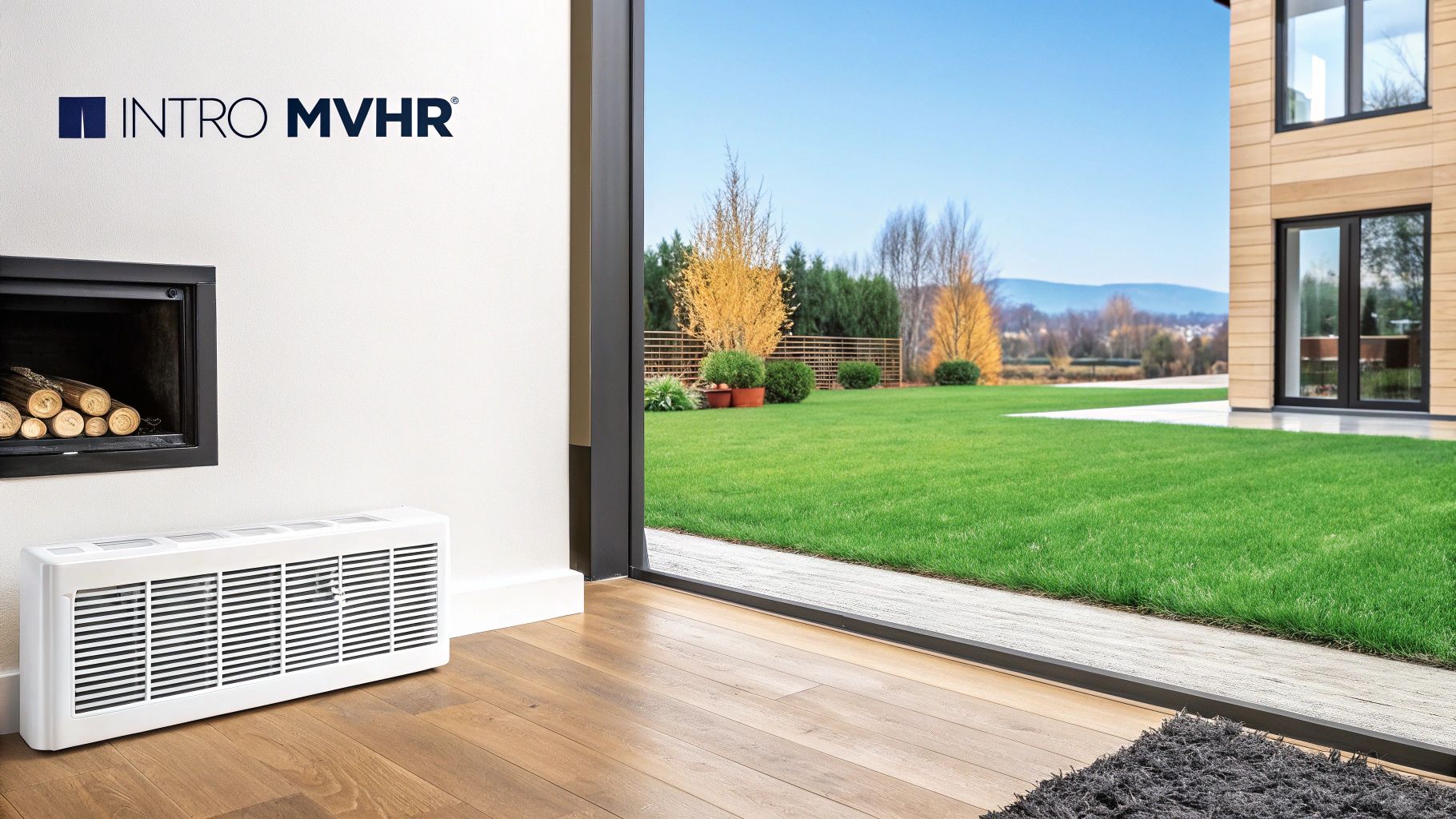
MVHR stands for Mechanical Ventilation with Heat Recovery. This system continuously refreshes your home’s air without losing valuable heat—a critical factor in Ireland’s climate. Imagine having a continuous flow of fresh, filtered air that replaces stale air, creating a healthier and more comfortable living environment. That’s MVHR in essence.
MVHR systems accomplish this through a well-designed heat exchange process. Stale, moisture-laden air filled with CO2 is extracted from areas like bathrooms and kitchens. This air then passes through a heat exchanger, the core of the MVHR system.
Simultaneously, fresh air is drawn in from outside, also passing through the heat exchanger. Crucially, these two air streams do not mix. The heat from the extracted air transfers to the incoming fresh air, meaning the fresh air entering your home is pre-warmed during colder months, reducing the load on your heating system.
Several essential components work together to make MVHR effective:
The growing popularity of MVHR in Ireland is evident in its expected growth rate. The Irish MVHR market is predicted to grow significantly, driven by stricter energy efficiency regulations and an increasing focus on indoor air quality. For more detailed statistics: Learn more about the growth of the MVHR market.
This trend underscores MVHR as an essential factor for homeowners aiming to create healthier and more energy-efficient homes. We’ll explore the specific benefits of MVHR and how it can enhance your living environment in the following sections.

Irish homes have significantly evolved in ventilation techniques. We’ve moved from simple practices like opening windows and passive stack ventilation to more advanced systems that improve both air quality and energy efficiency. This shift reflects an increased awareness of the importance of healthy indoor environments and the need to minimize energy use. This is where Mechanical Ventilation with Heat Recovery (MVHR) systems come into play.
Historically, ventilation in Irish homes mainly focused on dampness and mold prevention. Think drafty windows and chimneys. However, these methods were inefficient, leading to substantial heat loss, especially in winter. The focus shifted with the introduction of trickle vents and extract fans, offering a more controlled approach to ventilation. Yet, these methods still didn’t deliver optimal air quality and energy performance.
This led to the adoption of MVHR systems, once considered specialized technology for high-performance buildings. This was partly due to an existing preference for more conventional methods like trickle vents and single-room extract fans. Consequently, MVHR hasn’t historically been as widespread. The higher initial investment and the requirement for airtight construction for optimal performance have historically hindered broader adoption. For MVHR systems to function effectively, homes ideally need an air permeability of 3 m³/m².hr or less, a significant challenge, especially when retrofitting older Irish properties. Learn more about the history of MVHR in Irish homes here.
Regional factors have influenced MVHR adoption rates across Ireland. The colder climate in the west, for instance, has highlighted the advantages of MVHR in conserving heat and reducing energy costs. In densely populated urban areas like Dublin, MVHR systems have become increasingly appealing due to their ability to filter pollutants and improve indoor air quality.
MVHR represents more than just a technological advancement; it reflects a shift in how we approach comfortable and energy-efficient homes in Ireland. These systems are now recognized as essential components of modern building design, emphasizing a move toward healthier and more sustainable living spaces. The growing focus on reducing carbon footprints and meeting energy efficiency targets further underscores the significance of MVHR in the current Irish housing market.

We’ve covered the technical side of Mechanical Ventilation with Heat Recovery (MVHR), but what practical differences will you notice in your Irish home? This section explores the tangible benefits that make MVHR an attractive option for homeowners. These advantages extend beyond basic ventilation, creating a healthier, more comfortable, and more affordable living space.
One of the main advantages of MVHR is the significant improvement in indoor air quality. Opening windows in urban areas often invites noise pollution and traffic fumes. MVHR systems continuously filter incoming air, removing dust, pollen, and other allergens. This results in a cleaner, healthier environment, especially beneficial for those with allergies.
For example, homes near busy roads in cities like Dublin can greatly reduce incoming pollutants with effective MVHR filtration, allowing you to enjoy fresh air without compromising your well-being.
Besides cleaner air, MVHR offers significant financial benefits through energy savings. The heat recovery element prevents constant heat loss associated with traditional ventilation, leading to lower heating bills.
Moreover, these systems align with Ireland’s push for energy-efficient homes. Studies show that using MVHR can dramatically cut energy use. To illustrate, a comparison between MVHR and Mechanical Extract Ventilation (MEV) shows MVHR saving roughly 3,274.4 kWh per year.
This results in significant savings—around €209 annually for gas-heated homes and approximately €1,041 annually for heat pump-powered homes, based on 2023 energy prices. For more detailed information, Explore the energy savings potential of MVHR.
To further illustrate the potential savings, let’s examine a comparison table:
This table compares energy consumption, cost savings, and carbon reduction between MVHR systems and traditional ventilation methods in typical Irish properties.
| Metric | MVHR System | Traditional Ventilation | Annual Savings |
|---|---|---|---|
| Energy Consumption (kWh) | Assumed lower value based on source | Assumed higher value based on source | 3,274.4 kWh |
| Annual Cost (Gas) | Assumed lower value based on source | Assumed higher value based on source | €209 |
| Annual Cost (Heat Pump) | Assumed lower value based on source | Assumed higher value based on source | €1,041 |
As this table demonstrates, the energy savings with MVHR can be substantial, resulting in lower annual costs for both gas and heat pump systems.
MVHR systems effectively address two common problems in Irish homes: condensation and mold. By constantly circulating and filtering air, these systems regulate humidity, preventing dampness that leads to mold growth.
In addition, MVHR creates a more even temperature throughout the house, eliminating cold spots often found in older Irish properties. This results in a truly comfortable living environment all year round, especially valuable in Ireland’s damp climate, fostering a healthier and more pleasant home.
From improved air quality to lower bills and consistent temperatures, MVHR provides numerous benefits for Irish homeowners. It’s an investment in a healthier, more comfortable, and more environmentally friendly home.
These advantages are especially relevant in Ireland, given its climate challenges and a growing focus on energy efficiency.

Finding the right Mechanical Ventilation with Heat Recovery (MVHR) system for your Irish home isn’t a one-size-fits-all process. It involves carefully evaluating your property and your household’s specific needs. This guide will walk you through the important factors to consider, helping you make a smart investment in a system that performs efficiently and provides lasting value.
One of the first decisions is whether to go with a centralised or decentralised system. Centralised MVHR systems are generally a good fit for new builds, integrating seamlessly into the initial design. A single unit and ductwork ventilate the whole house, providing balanced airflow.
Decentralised units, however, are often preferred for retrofitting existing homes. These systems ventilate individual rooms or zones, offering greater flexibility. This is particularly beneficial in older Irish properties where installing extensive ductwork can be difficult.
The heat exchanger is the core component of an MVHR system. The type you choose has a significant impact on overall efficiency. Counterflow heat exchangers are common, providing effective heat recovery.
If humidity control is a priority, consider an enthalpy heat exchanger. These specialized units transfer both heat and moisture, which enhances comfort, especially during dry winter months. Given Ireland’s often unpredictable climate, this can be a valuable feature.
Choosing the right filtration is especially important if allergies are a concern or if you live in a city. Basic filters remove dust and larger particles, while more advanced filters can trap pollen, pollutants, and even certain viruses.
Effective filtration is key to creating a healthy indoor environment, especially in urban areas like Dublin, which can have higher pollution levels.
Many modern MVHR systems feature smart controls. These allow for programmable schedules and automated adjustments based on humidity and CO2 levels. Some can even integrate with whole-home automation systems, providing ultimate control and optimized efficiency.
This smart technology helps customize the system to your family’s lifestyle and optimize performance based on real-time conditions and occupancy patterns.
Finally, make sure the system’s specifications are appropriate for your home’s size and the number of occupants. A system that’s too small won’t provide enough ventilation, while an oversized one will be costly to run. Correctly sizing your MVHR system ensures you get the best return on your investment and a comfortable, healthy home environment.
To further enhance your home’s sustainability, consider environmentally friendly choices throughout your house, such as eco-friendly kitchen cabinets.
To help you understand the core components of an MVHR system, their functions, and how they contribute to overall system efficiency, refer to the table below:
MVHR System Components and Their Functions
This table outlines the main components of an MVHR system, explaining their purpose and contribution to overall system efficiency.
| Component | Function | Maintenance Requirements | Impact on Efficiency |
|---|---|---|---|
| Heat Exchanger | Recovers heat from extracted air to pre-heat incoming fresh air | Regular cleaning to prevent dust build-up | Significantly impacts heat recovery efficiency |
| Supply Fan | Draws fresh air into the system | Periodic cleaning and inspection | Ensures adequate fresh air supply |
| Extract Fan | Extracts stale air from the home | Periodic cleaning and inspection | Removes pollutants and moisture |
| Ductwork | Distributes fresh air throughout the home and extracts stale air | Regular cleaning to prevent dust and mold growth | Impacts airflow and system efficiency |
| Filters | Removes dust, pollen, and other pollutants from incoming air | Regular replacement | Improves indoor air quality and protects the system |
| Controls | Allows users to adjust ventilation rates and other settings | Minimal maintenance | Can optimize efficiency based on occupancy patterns |
This table summarizes the key elements of an MVHR system, highlighting the importance of regular maintenance for optimal performance and efficiency. Each component plays a vital role in ensuring a healthy and comfortable indoor environment.
Bringing the benefits of Mechanical Ventilation with Heat Recovery (MVHR) to your Irish home involves careful planning and execution. This section will guide you through the essential steps, from the initial planning phase to ensuring optimal long-term performance. We’ll explore practical considerations and potential challenges, offering solutions suitable for a variety of Irish home types.
A successful MVHR installation begins with meticulous planning. This includes evaluating your home’s layout, identifying the most suitable system type, and selecting a qualified installer.
Real-world examples can be invaluable for visualizing how MVHR systems can be integrated into different property types.
Airtightness is more than just a technical term; it’s the cornerstone of effective MVHR operation. In a leaky home, the MVHR system has to work harder, consuming more energy and potentially failing to deliver optimal ventilation.
Space can be at a premium in Irish homes. However, creative solutions exist for accommodating the necessary MVHR components.
Adhering to building regulations ensures your MVHR installation meets Irish standards.
Selecting a competent installer is essential for a successful MVHR project. Look for installers with relevant certifications and experience. Correct valve installation, for instance, is critical for system performance and longevity. For further details on correct valve installation procedures, learn more here.
A well-planned and professionally installed MVHR system can greatly enhance your home’s comfort, health, and energy efficiency, making it a valuable investment for the future.
After installation, understanding daily life with Mechanical Ventilation with Heat Recovery (MVHR) is crucial for maximizing its benefits. This section offers practical insights from long-term MVHR owners in Ireland, covering maintenance, running costs, seasonal adjustments, and troubleshooting.
Maintaining your MVHR system is straightforward. A few simple routines ensure peak performance for years. Regular filter replacement is most important. Depending on your environment and usage, replace filters every 6-12 months. This prevents dust build-up, maintains airflow, and ensures optimal air quality.
Periodically clean supply and extract vents. A quick wipe removes dust and debris, optimizing airflow and efficiency. Proper MVHR installation is key for long-term performance. For more on valve installation, see this valve installation guide.
While the initial MVHR investment might seem large, understanding the running costs clarifies the financial picture. Based on Irish energy prices and usage, running an MVHR system is surprisingly affordable. The fans’ electricity consumption is minimal, often offset by heating bill savings. Consider it a small investment for continuous fresh, filtered air and a healthier home.
MVHR systems adapt to the changing Irish seasons. In summer, bypass the heat exchanger to bring in cooler night air, reducing the need for air conditioning. During winter, a fully engaged heat exchanger maximizes heat recovery, keeping your home warm and minimizing energy use. Some systems offer humidity control, valuable in the damp Irish climate, preventing condensation and mold.
Occasionally, minor issues arise. Reduced airflow often signals clogged filters—easily fixed with a replacement. Unusual noises? Check vents and ductwork for obstructions. Most minor issues are easily resolved with basic DIY troubleshooting. For complex problems, consult a qualified MVHR technician.
MVHR systems are durable, lasting 15-20 years. While regular filter changes are vital, other components may need replacing. Understanding component lifespans helps you budget for long-term maintenance, ensuring optimal system performance and maintaining the wellness benefits through proper operation and proactive care.
Ready to experience MVHR’s comfort and health benefits in your Irish home? Visit ECO Tec Energy to explore MVHR solutions and find the perfect system.